May 13, 2026 • Cara Whitfield • 9 min reading time • Prices verified June 4, 2026
Which Spray Modes Actually Relieve Muscle Tension? An Honest Guide to Massage Settings
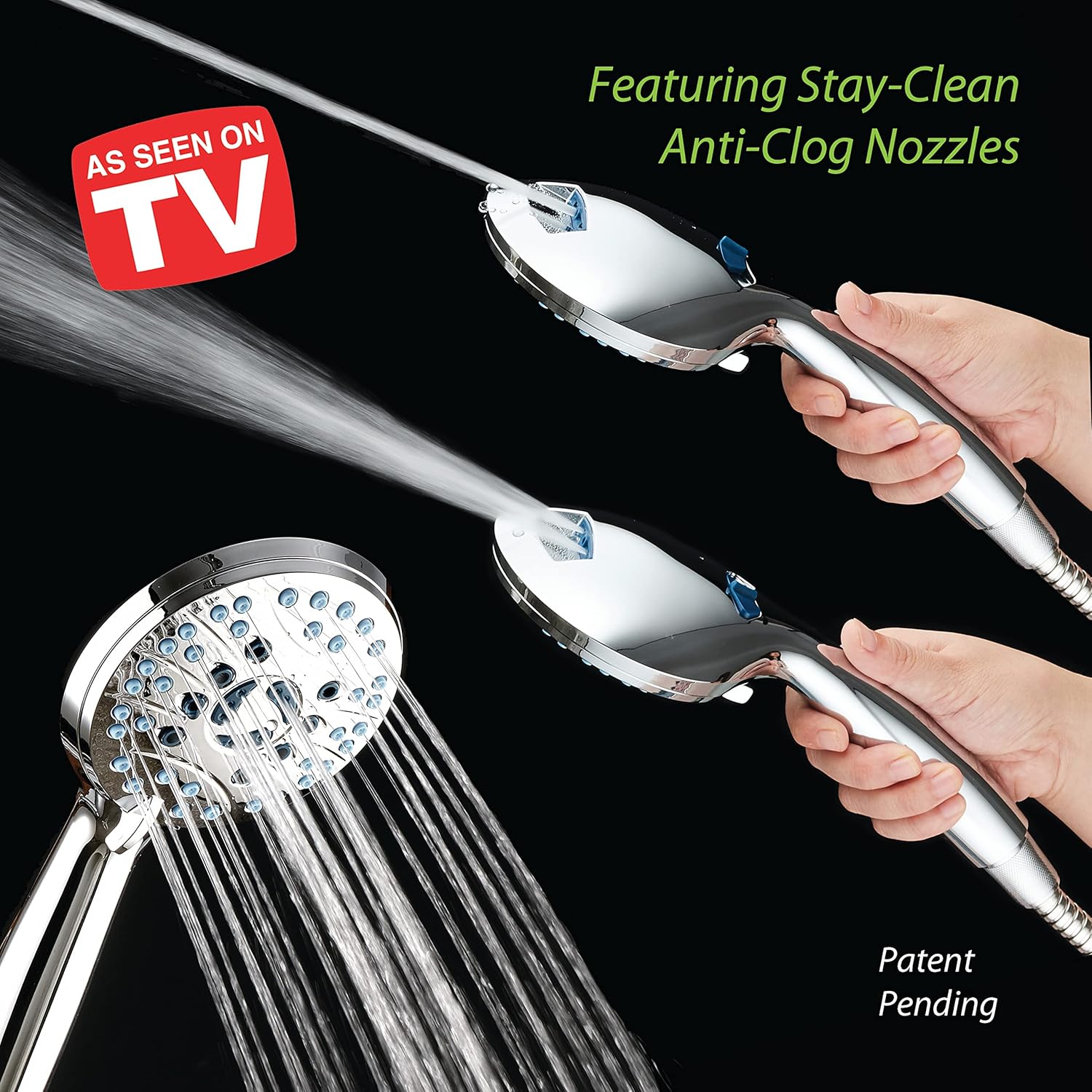
If you’ve ever twisted a showerhead’s mode ring to the setting labeled “massage” and felt… basically nothing, you’re not imagining it. Most budget and mid-range showerheads slap the word “massage” on a spray mode the way snack brands put “hearty” on a bag of crackers — the label exists, the experience doesn’t quite deliver. A genuine massage spray mode does something specific: it concentrates water into pulsing, high-pressure bursts that rhythmically compress and release soft tissue, similar in principle to what a percussion massager does mechanically. The result, when engineered well, is measurable tension relief in the neck, shoulders, and lower back. The result, when engineered poorly, is a weak scatter of droplets that feels like gentle rain with extra steps. This guide breaks down exactly how spray modes work, which design features separate therapeutic-grade modes from marketing fiction, and how the fixtures your audience is actually considering — Hansgrohe, Grohe, Kohler, Waterpik, and Speakman — stack up when real muscle relief is the goal.
Why “Massage Mode” Is a Spectrum, Not a Feature
The phrase “massage spray” covers an enormous range of actual hydraulic behavior. To use it usefully, you need two underlying concepts: pulse frequency (how many times per second the water stream cycles on and off) and impact force (how much pressure each burst delivers at skin surface). Both variables are shaped upstream by the showerhead’s internal disc, the number and arrangement of nozzles, and your home’s incoming water pressure — typically 45–80 PSI in most U.S. residential installations.
Per the EPA’s WaterSense program specifications, all certified showerheads must flow at or below 2.0 GPM (gallons per minute) at 80 PSI, and most current WaterSense fixtures are rated at 1.8 GPM. The practical tension here — and it’s real — is that meaningful hydrotherapy requires concentrated force, but flow-rate caps limit how much water you have to work with. The brands that solve this problem best do so by engineering focus, not flow. They route a fixed water budget through fewer, tighter nozzles in massage mode, trading coverage area for concentrated impact. Budget fixtures often keep nozzle count the same across modes, changing nothing but the visual pattern — which is why the massage setting feels indistinguishable from regular spray.
The American Physical Therapy Association’s clinical overview of hydrotherapy and soft tissue recovery notes that effective hydrostatic pressure — the kind that produces genuine tissue response — requires both adequate force and rhythmic application. Sporadic, low-pressure spray activates sensory nerve endings at the skin surface but doesn’t meaningfully penetrate the fascia and muscle tissue where chronic tension lives. That distinction — skin-level stimulation versus deeper tissue response — is the single most important frame for evaluating massage spray claims honestly.
The Four Spray Architectures That Actually Matter
Most showerheads ship with 3–9 labeled spray modes. In practice, they sort into four functional archetypes. Knowing which archetype you’re buying matters more than counting modes.
1. Concentrated Pulse (the real massage) A single or dual column of nozzles fires in rapid alternation, delivering high-impact bursts to a small area. This is the mode that physical therapists and athletic recovery users prioritize. Speakman’s Reaction series and Waterpik’s PowerPulse technology are designed explicitly around this architecture. Owners of Waterpik fixtures consistently report meaningful relief for post-workout neck and shoulder tension in aggregated reviews at This Old House and Architectural Digest. The tradeoff: coverage area is narrow, so you’re effectively spot-treating rather than full-body relaxing.
2. Wide Pulse (tension sweep) A broader nozzle array pulses together, covering the upper back or shoulders in one application. Less targeted, but more practical for lower-back relief when you can angle the fixture. Grohe’s SmartActive line uses a mode Grohe markets as “Massage” that functions in this wider-pulse architecture — reviewers consistently describe it as effective for diffuse tension across the shoulder blade region rather than precise trigger-point work.
3. Rain + Pulse Combination Alternates between a full drenching spray and a pulse burst in programmed cycles. Hansgrohe’s Select E models include a mode that cycles this way, branded as “PowderRain” combined with a pulse interval. Healthline’s overview of hydrotherapy benefits notes that the contrast stimulus — pressure followed by gentle diffusion — can trigger a parasympathetic (rest-and-digest) response that reads subjectively as relaxation more than muscle release. Worth knowing: this mode is genuinely calming, but it’s not the same as targeted muscle work.
4. Turbo or Jet (pinpoint pressure) Single high-pressure jet, often adjustable in position. Kohler’s Moxie and Artifacts series include jet modes that owners in long-run reviews describe as effective for the base of the skull and around the shoulder joint. The limitation is ergonomic — holding the handheld at the right angle for sustained application requires an arm that isn’t the tired arm. Wall-mount models in jet mode work best when paired with an adjustable slide bar.
By the Numbers: Pulse Specs Across Key Models
| Model | Flow Rate | Massage Architecture | Pulse Modes | Approx. Price |
|---|---|---|---|---|
| Waterpik PowerPulse DSL-653ME | 1.8 GPM | Concentrated pulse | 6 (incl. 3 pulse variants) | $55–$85 |
| Speakman S-2252 Reaction | 1.75 GPM | Concentrated pulse + wide pulse | 5 | $70–$110 |
| Grohe Rainshower SmartActive 130 | 1.75 GPM | Wide pulse | 3 | $180–$260 |
| Hansgrohe Croma Select E 180 | 1.75 GPM | Rain/pulse combination | 3 | $200–$280 |
| Kohler Artifacts 2.5GPM (non-WS) | 2.5 GPM | Concentrated jet | 1 jet + 2 spray | $250–$400+ |
Note: Kohler Artifacts in 2.5 GPM configuration exceeds current WaterSense limits — verify local code compliance before specifying for renovation. WaterSense-compliant Kohler options are available at 1.75 GPM.
Matching Modes to Specific Wellness Outcomes
This is where the buyer decision gets genuinely useful, so let’s be direct.
Tension headaches and neck tightness: You want concentrated pulse, applied at the base of the skull and the upper trapezius. This is the use case where Waterpik’s PowerPulse architecture and Speakman’s Reaction series genuinely outperform premium European fixtures. At $70–$110, the Speakman Reaction delivers more therapeutic pulse impact than a $260 Grohe in this specific application — not because Grohe is poorly engineered, but because Grohe prioritizes luxury sensation over clinical pressure concentration. If neck and head tension is the primary driver, the Speakman or Waterpik wins on pure therapeutic merit even against fixtures costing three times as much.
Post-workout shoulder and upper-back recovery: Wide pulse architecture, ideally from a handheld on a slide bar so you can target the rhomboids and posterior deltoid without contorting. The Grohe SmartActive’s massage mode is genuinely well-suited here. Owners in aggregated reviews at Architectural Digest describe the pressure as “sustained and firm without feeling like a fire hose” — which is exactly the profile athletic recovery users need. The Delta In2ition’s dual-head design ($80–$130) also earns consistent praise for recovery use because the detachable head lets you direct wide pulse at the posterior shoulder while standing naturally.
Chronic lower-back tension: This is the most anatomically challenging use case for a showerhead, because the lumbar region requires both sustained pressure and precise positioning. The honest answer from reviewing published user reports: handheld fixtures on a slide bar work significantly better than fixed wall mounts for lumbar targeting. The Moen Engage Magnetix ($60–$120) earns repeated mention in accessibility and physical therapy adjacent forums for its magnetic docking (which makes one-handed repositioning practical) and its wide-pulse mode. For buyers in this category, the fixture mechanism — magnetic dock, adjustable bar height — matters as much as the spray mode itself.
Generalized stress reduction and parasympathetic activation: Here, the Hansgrohe PowderRain combination mode is genuinely best-in-class. The alternating drenching-and-pulse cycle that Hansgrohe engineers into the Croma Select E is calibrated for subjective relaxation response, not muscle work. Healthline’s hydrotherapy overview describes the mechanism: the nervous system reads rhythmic pressure variation as a signal to downregulate sympathetic activation. If the primary wellness goal is stress relief rather than muscle release, Hansgrohe’s mode engineering is the right call — and the $200–$280 price reflects genuine R&D investment in that outcome.
The Tradeoffs Nobody Puts in the Product Description
A few honest friction points that matter at purchasing time:
Pulse intensity degrades with pressure drop. Every massage mode spec is rated at a specific incoming pressure, usually 60–80 PSI. In homes with 45 PSI or lower (common in older multi-story buildings or homes with high fixture counts), the effective pulse force drops noticeably. Speakman and Waterpik publish their specs at 60 PSI; Hansgrohe and Grohe typically rate at 72–80 PSI. If your home runs low-pressure, the mid-range American brands will outperform their European counterparts in real use even if the spec sheet says otherwise.
More modes does not mean better modes. The Kohler Moxie’s Bluetooth speaker integration is genuinely enjoyable — reviewers love it for mood and ambient experience. But the presence of a speaker doesn’t improve the spray mechanics. This Old House’s showerhead buying guide explicitly notes that mode count is a poor proxy for mode quality. A fixture with three well-engineered modes (Grohe SmartActive) outperforms a nine-mode fixture where six modes are minor variations of the same nozzle pattern.
Finish availability affects resale and matching. For design-conscious buyers doing a full master-bath renovation, finish consistency across fixtures matters. Hansgrohe’s Brushed Black Chrome and Polished Gold finishes are more widely stocked through authorized dealers than Grohe’s equivalent Warm Sunset or Hard Graphite options as of mid-2026. Architectural Digest’s fixture coverage notes this stocking gap has widened as supply chain normalization has favored higher-velocity SKUs. If you’re specifying an uncommon finish, verify dealer stock before committing to a fixture family — switching brands mid-renovation because a finish is backordered is a real and avoidable cost.
The Decision Framework
If the primary goal is targeted therapeutic relief — tension headaches, post-workout muscle recovery, physical therapy support — specify a concentrated-pulse architecture first. Speakman Reaction or Waterpik PowerPulse at $70–$110 will outperform $250+ European fixtures on this specific axis. Add the $250+ fixture for aesthetic and finish reasons if the budget supports it, but don’t expect the premium price to buy proportionally better muscle relief.
If the primary goal is generalized wellness and stress reduction in a spa-aesthetic master bath, Hansgrohe’s Croma Select E or Grohe’s SmartActive is the right tier. The engineering investment in those fixtures goes into sensory experience architecture — the way modes transition, the droplet character, the handle ergonomics — and that investment is real. Owners consistently report a qualitatively different shower experience at the $200–$280 tier, even when clinical muscle relief isn’t the benchmark.
If the goal is lower-back or lumbar accessibility — post-rehab, aging-in-place, or limited mobility — the fixture mechanism (slide bar height, magnetic dock, handheld weight) matters as much or more than spray mode. Specify the Moen Engage Magnetix for that use case and pair it with a properly height-adjusted slide bar before worrying about which pulse variant to select.
The honest rule: match the fixture to the outcome, not to the price tier. The $85 Waterpik relieves neck tension better than the $280 Hansgrohe. The $280 Hansgrohe delivers a better spa ritual than the $85 Waterpik. Both statements are true, and neither is a knock on either fixture — they’re built for different definitions of “relief.”