May 6, 2026 • Cara Whitfield • 9 min reading time • Prices verified June 4, 2026
Post-Workout Shower for Muscle Recovery: Building a Hydrotherapy Routine Around Your Shower Head
Most people step out of the gym, turn on the shower, and stand there until the hot water runs out. That’s not nothing — heat does help muscles relax — but it’s leaving a lot of recovery on the table. Hydrotherapy (using water’s temperature and pressure as deliberate therapeutic tools, rather than just a rinse) is a legitimate recovery method with real physiological backing. This article is a practical guide for the wellness-invested or athletically active homeowner who’s already thinking about a shower upgrade and wants to know how to choose a fixture that earns its place in a recovery routine — not just one that looks good in a renovation photo.
Why Water Pressure and Temperature Actually Matter for Recovery
The short version: muscle soreness after hard training is largely caused by localized inflammation and reduced circulation in stressed tissue. The body clears that metabolic waste and brings in repair resources through blood flow. Water — applied at the right temperature, in the right sequence, at the right pressure — can meaningfully influence that process.
Per the National Athletic Trainers Association’s position statement on hydrotherapy and recovery, contrast hydrotherapy (alternating warm and cold water exposure) is one of the most studied home-accessible recovery tools, with research consistently showing reduced perceived soreness and faster return-to-training readiness compared to passive rest. The American College of Sports Medicine’s recovery modality guidelines echo this: the mechanism is vasodilation (warm water opens blood vessels, increasing local circulation) followed by vasoconstriction (cold water causes vessels to contract, creating a pumping effect that helps flush metabolic byproducts from fatigued tissue).
What most people miss: the mechanical component. A high-quality massage or pulsating spray mode doesn’t just feel good — it provides percussive soft-tissue stimulation. Applied along the spine, glutes, calves, or upper traps, a properly tuned pulse spray mode functions similarly to light manual massage. That’s not marketing copy; it’s why physical therapists have used hydrotherapy jets in clinical settings for decades.
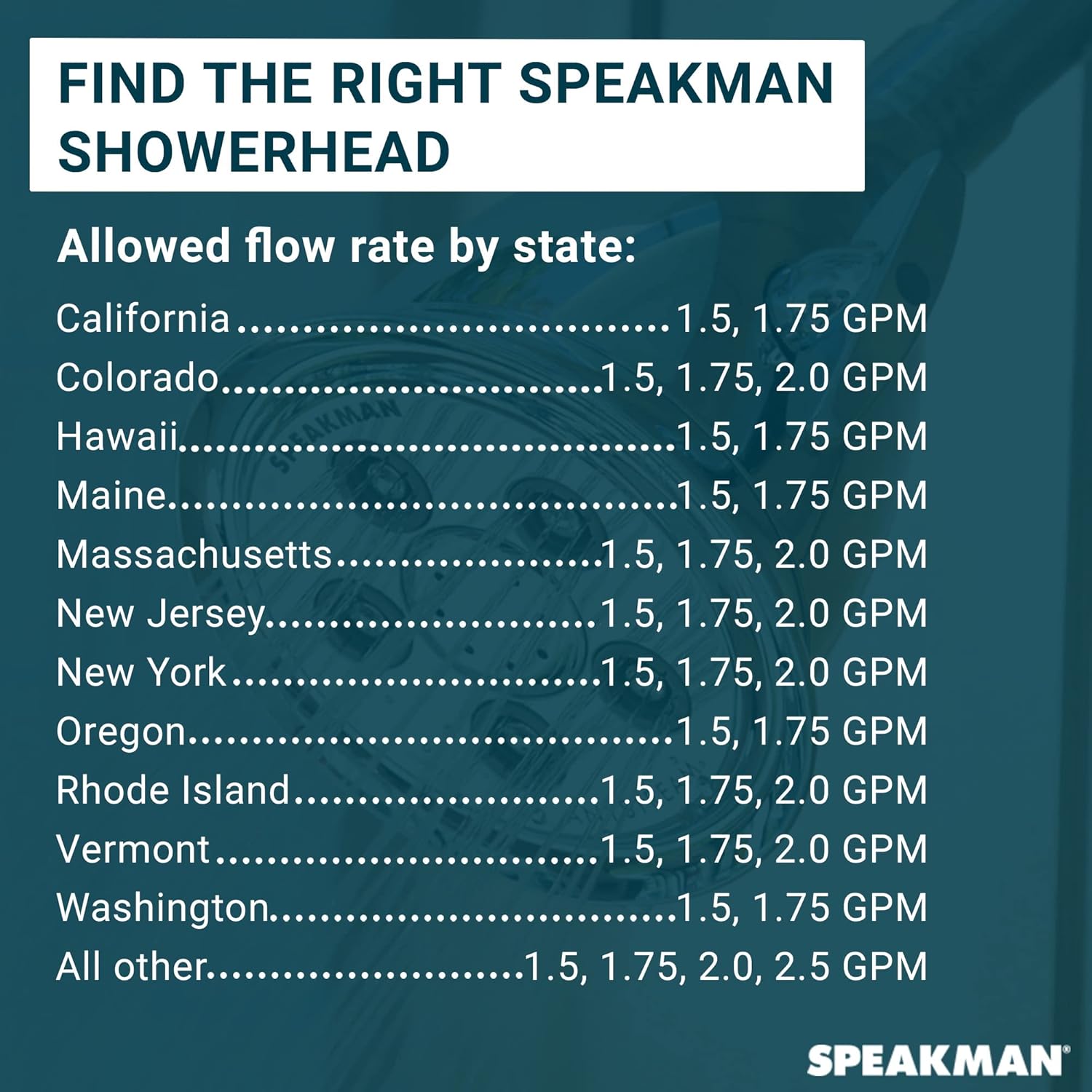
The tradeoff to name upfront: You can’t have unlimited pressure and water-efficient flow at the same time. Federal standards cap most residential shower heads at 2.0 GPM (gallons per minute), with California and Colorado mandating 1.8 GPM or below. The best fixtures in the $150–$400 range are engineered to make 1.8 GPM feel like more — through nozzle geometry, spray channel design, and air-infusion technology. Chasing higher pressure by removing the flow restrictor (a plastic insert inside the head) will violate plumbing codes, typically void your warranty, and only marginally improve the therapeutic outcome if the fixture is well-engineered to begin with. The fixtures worth buying solve this problem through design, not cheating.
Building the Routine: A Sequence That Works
Before getting into fixture specs, it helps to understand the routine structure you’re optimizing for. The most evidence-supported post-workout shower protocol runs in three phases:
Phase 1 — Warm Flush (3–5 minutes) Start at comfortably warm water (around 100–104°F). Use a broad rainfall or wide-coverage spray to increase blood flow to the surface of the skin and begin relaxing superficial muscle tissue. This is the “softening” phase — you’re not targeting anything yet.
Phase 2 — Targeted Massage Pressure (5–8 minutes) Switch to your fixture’s pulse or massage mode and work major muscle groups methodically. The Healthline overview of post-exercise hydrotherapy notes that 5–8 minutes of targeted water pressure to large muscle groups (quads, hamstrings, glutes, lower back) is sufficient to produce measurable tension reduction without overstimulating already-inflamed tissue. For upper-body days, redirect to the traps, rear delts, and thoracic spine.
Phase 3 — Cool-to-Cold Contrast (1–3 minutes) Drop water temperature progressively — ideally to 60–68°F if your water heater allows. Owners of combo hand-held + fixed fixtures consistently report that finishing with cold water directed specifically at just-worked muscle groups, rather than full-body, is more tolerable and easier to maintain as a habit. You don’t have to be miserable. Ending cold is the goal; shocking your whole body into submission is optional.
By the numbers
- Warm phase: 100–104°F / 3–5 min → vasodilation, tissue relaxation
- Pulse massage phase: 1.8 GPM at max pressure setting / 5–8 min → mechanical stimulation
- Cold finish: 60–68°F / 1–3 min → vasoconstriction, lymphatic flush
- Total protocol: ~12–16 minutes
What to Look for in a Recovery-Oriented Shower Head
Here’s where fixture choice stops being aesthetic and starts being functional. Not every shower head delivers meaningful therapeutic variation — and the gap between a $40 builder-grade head and a well-engineered $200+ unit is genuinely felt in a recovery context, not just in Instagram photos.
The modes that matter (and the ones that don’t)
Most shower heads advertise 5, 7, or even 9 spray modes. In a recovery context, you need exactly three to work well: a wide, enveloping rain or full-coverage mode for Phase 1; a genuine pulsating or massage mode for Phase 2; and the ability to reduce flow or temperature cleanly for Phase 3. Everything else — mist, pause, “champagne” — is marketing filler for most buyers.
Hansgrohe’s Select E line (the Croma Select E, typically $200–$280 at retail) is one of the more honest implementations of this. The PowderRain mode — which Hansgrohe describes as thousands of fine jets creating a “powder-soft” sensation — is genuinely distinct from standard rain spray. It’s particularly noted by reviewers for scalp and neck coverage during the warm flush phase. The Select button system lets users cycle between three preset modes without fumbling for a dial in mid-routine, which matters more than it sounds when your hands are soapy and your eyes are closed.
Grohe’s Rainshower SmartActive ($180–$320 depending on finish and size) takes a different engineering approach — the SmartActive name refers to internal channel geometry that maintains spray intensity at lower flow rates. Based on published specs and the pattern across aggregated owner reviews, this is particularly effective for users with lower home water pressure (a common issue in multi-story homes or older pipe systems), because the fixture is engineered to compensate rather than disappoint. Grohe’s Jet mode is consistently described by owners as firm and targeted — useful for Phase 2 work along the spine and calves.
Waterpik and Speakman occupy a different tier — they’re less design-forward but more clinically tuned. The Waterpik PowerPulse series, which is specifically marketed toward therapeutic use and physical-therapy-adjacent applications, delivers a high-concentration pulse spray that reviewers in the athletic and recovery community consistently rate as the most effective for pure percussive stimulation. This Old House’s overview of shower head selection notes Speakman as a standout for pressure performance in the mid-price range, with the Speakman Anystream technology allowing users to blend spray intensity via a single dial rather than switching between discrete modes — which gives finer control during Phase 3 temperature-and-pressure tapering.
For buyers in the first-time-upgrade segment stepping up from builder-grade hardware, the Delta In2ition ($80–$130) deserves a mention because its detachable hand-held head design is specifically useful for directed Phase 2 work: you can hold the wand against a specific muscle group rather than relying on the fixed overhead position. Wirecutter has consistently flagged the In2ition’s two-in-one design as practically underrated for exactly this use case.
Hand-held vs. fixed: the recovery tradeoff
Fixed overhead fixtures create the most immersive warm-flush and cold-finish experience — there’s something genuinely different about standing under a 10-inch rain head versus holding a wand. But for targeted Phase 2 work, especially on hamstrings, lower back, and feet, a hand-held component is nearly non-negotiable. The practical recommendation from aggregated owner experience across multiple fixture categories: if your budget allows, the combination of a fixed rain head and a wall-bar hand-held unit — even mismatched brands — outperforms any single-unit compromise. If you’re choosing one fixture, lean toward the hand-held or combo style for recovery use cases specifically.
Decision Framework: If X, Then Y
This is where the practitioner voice earns its keep. Here are the decision rules that actually resolve the fixture choice for most buyers in this context:
If your primary use case is athletic recovery and you don’t care about design aesthetics: → Waterpik PowerPulse or Speakman Anystream. Prioritize pulse-mode quality over everything. The gap in visual design is real; the gap in therapeutic output is real in the other direction.
If you’re renovating a master bath and want the fixture to anchor a spa aesthetic AND serve recovery use: → Hansgrohe Croma Select E or Grohe Rainshower SmartActive in the $200–$280 range. Both are engineered to perform at 1.8 GPM flow rates, both have legitimate multi-mode spread, and both will photograph well for the renovation portfolio. Hansgrohe’s finish warranty (lifetime on chrome, limited on specialty finishes) is notably stronger than most competitors at this price point — a relevant consideration for a high-traffic master bath.
If you have low home water pressure (under 45 PSI static): → Grohe SmartActive over Hansgrohe Croma in this specific case. The SmartActive’s channel geometry is specifically engineered for low-pressure performance, whereas the PowderRain mode on the Croma Select E can feel underwhelming below roughly 50 PSI.
If you’re doing a quick-win upgrade under $150 and want meaningful improvement: → Delta In2ition combo. The detachable hand-held gives you Phase 2 targeting capability that no fixed-head-only option at this price matches.
If accessibility or post-rehab recovery is driving the purchase: → Hand-held unit on a full-height slide bar, full stop. Pressure adjustability matters; seated or standing flexibility matters more. Delta’s Universal Showering Components line and Moen’s Attract Magnetix both offer accessibility-compatible configurations with magnetic docking that owners with limited dexterity consistently rate as genuinely useful, not performative.
The Honest Bottom Line
A thoughtfully chosen shower head won’t replace an ice bath, a foam roller, or eight hours of sleep. But as the American College of Sports Medicine’s recovery guidelines make clear, hydrotherapy at home is one of the most accessible, lowest-barrier recovery tools available — and most people are leaving its benefits completely unrealized because they’re running an unstructured hot shower and calling it done.
The routine structure above (warm flush → targeted pulse massage → cool contrast finish) is actionable today with whatever fixture you currently have. But if a renovation or upgrade is already in the decision window, the delta between a builder-grade head and a well-engineered $200–$280 unit from Hansgrohe, Grohe, or Speakman is meaningful in exactly the therapeutic context described here. The spray-mode differentiation is real. The flow-rate engineering at 1.8 GPM is real. And a fixture you’ll actually use consistently — because it feels good, looks right, and fits the ritual — is worth the premium in a way that purely spec-based comparison will never fully capture.
Do the routine. Pick the fixture that makes you want to.